
Motivational Intelligence — sixteen life motives, one fit.

Welcome
Monday morning.
A leadership offsite in a glass conference room. The new strategy is approved. Nobody objects. Six months later, half the work has not started — and nobody quite remembers why.
The room was well-managed. The motives were not.

About me
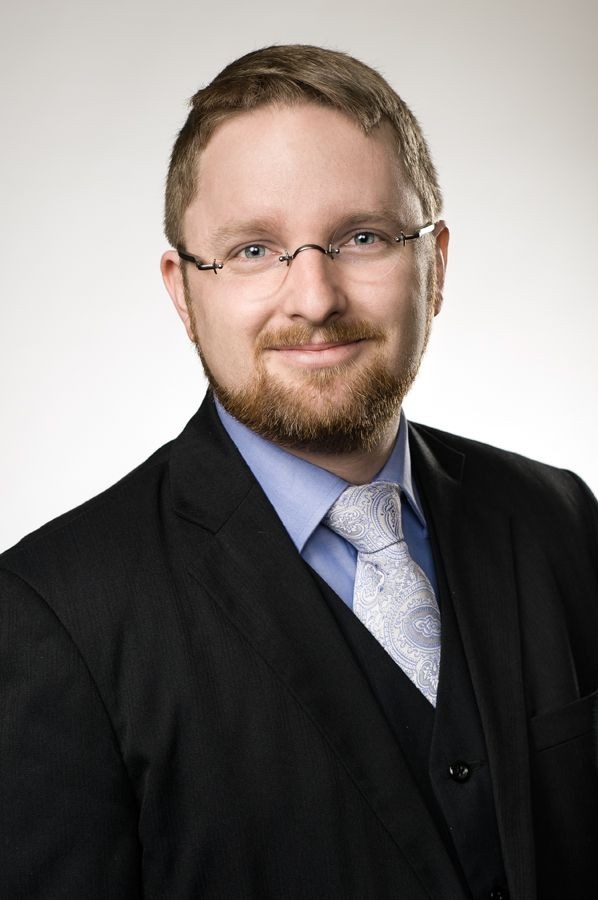
I'm Brunello Gianella, 72, Swiss, Motivational Intelligence Advocate. After more than forty years as a consultant on change mandates I stepped out of the advisory role and now work as a mentor — not as a coach. The lens that sharpened in those years is the Reiss Motivation Profile®.
What I mean by Motivational Intelligence
Sixteen life motives, named by Steven Reiss. Each can be strongly or weakly developed in a person. Neither pole is the better one. Both can carry, both can wear out — depending on the role, the system, and the fit between them.
A strong need for Power — "I value competence, productivity, and excellence." A role with little influence of will can leave this need unmet at work.
A weak need for Vengeance — "I value peacemaking, cooperation, and harmony." A culture that rewards confrontation, competition, and winning can make the role harder to sustain.
Motives are not symptoms. They make goals, roles, and incompatibilities discussable.
What this is not
Not a method that fixes you. Not a personality test that boxes you. Not a six-month coaching.
Mentoring is a relationship, not a curriculum. The Reiss Motivation Profile® is a working tool, not an oracle. Fit — Passung — is what gives energy back. Adaptation costs it.

For whom
Leaders who want to read their team's motivational architecture before the next reorganisation.
HR practitioners who suspect that "engagement" is a label for something more specific.
Schools that want to see a class as a motivational shape, not as a level of behavioural noise.
Individuals whose work has started to cost them more than it returns.
What you find here
Articles in English and German. Notes from the Reiss Motivation Profile® and its glossary. A direct way to reach me when a real question arises.
The aim is not to make you sound different. The aim is to make you sustainable in the role you actually want to hold.
Brunello Gianella | Motivational Intelligence Advocate Daily on LinkedIn — 08:00 CET (DE) · 18:00 CET (EN)
Inspire Growth
Motivational Intelligence — short definition
Motivational Intelligence (MI) is the skill of reading motives with precision — not as a single drive to be sparked, but as sixteen distinct intrinsic life motives, each strongly or weakly developed in every person. Steven Reiss named them in the Reiss Motivation Profile®.

MI makes the fit between motive profile and role visible — Passung where it works, friction where it does not.

Motivational Intelligence
Motivational Intelligence (MI) is the skill of reading motives with precision — not as a single drive to be sparked, but as sixteen distinct intrinsic life motives, each strongly or weakly developed in every person. Steven Reiss named them in the Reiss Motivation Profile®. MI makes the fit between motive profile and role visible — Passung where it works, friction where it does not.
Where the reading matters
In your own life
When you can name your sixteen motives by their strength, the question "why am I tired in this role?" gets a sharper answer than "you should be more resilient." A weak need for Order is not a character flaw. A strong need for Curiosity is not a luxury.
Less effort spent against yourself. More energy where the motive profile and the situation actually meet.
In leadership and HR
A team is usually managed as if motivation were one thing — bonuses, mission statements, engagement workshops. The architecture underneath gets missed: a single team carries several strong motives in tension. One person has a strong need for Independence — "I value my personal freedom." Another has a strong need for Social Contact — "I value the sense of belonging that comes from socializing with peers." Both are legitimate. The same intervention will not work for both.
A leader who reads motives stops looking for one fix. Pairing person and role becomes the work — and fewer reorganisations chase the wrong problem.
In the wider system
Resilience programmes, mindfulness curricula, and engagement surveys often individualise what is structurally a misfit. A motivationally illiterate organisation tells the person to adapt. A motivationally literate one looks at the role first.
Schools, public administration, healthcare — wherever roles are designed without reference to a motive profile, a few people fit by accident and many wear out by design.
The aim is not harmony. It is a system in which fewer people pay for a structural misfit with their own substance.

What changes when motives are read
What it focuses on
Not generic "inner drive." The sixteen specific intrinsic life motives from the Reiss Motivation Profile®, each strongly or weakly developed in a person, each producing its own kind of energy when the role fits — and its own kind of exhaustion when it does not.
What it changes at work
When a team is read by motive profile, stereotypes lose their hold. The strong-Order member gets the structure she needs to work. The weak-Order colleague is no longer labelled "unreliable" because he works in bursts. Goal attainment stops being a question of willpower and becomes a question of fit between profile and role.
How it develops
Motives themselves are stable — they shift little across a lifetime. What develops is the reading. With time, training, and a working vocabulary for the sixteen motives, you stop misdiagnosing yourself as "lazy" or "rigid" or "too sensitive" and start naming, accurately, what is asking to be met and what is asking to be made bearable.
A profile from the Reiss Motivation Profile® gives a baseline. Mentoring sharpens what the baseline cannot yet show — how the motive profile lives inside the actual role.
Where it shows up professionally
In hiring conversations that ask about the role's motive demands, not just the candidate's CV. In one-on-ones where a manager names the misfit before asking the person to "be more flexible." In organisational design where role and motive profile both stay on the table — not just the person under the spotlight.
Empower Success


Inspire Change
Where this comes from
For more than forty years I worked on change mandates for CEOs and leadership teams — strategy, structure, and the conversations that owners did not want to have. Those mandates closed long ago. What I kept is the reading of motives those years gave me.
Clients during that time: Shell, Ford, Hilti, Swiss Life, Mazda, Jaguar, Roche, Nestlé.
Today: angel investor at bluquist; mentor to leaders and HR teams who want a sharper reading of their motive profile and of the roles they design for others.

Customers: SHELL, FORD, HILTI, SWISS LIFE, MAZDA, JAGUAR, ROCHE, NESTLE.

Angel Investor at bluquist.
We uses cookies